Filter By:
Tech Debt Burndown Podcast S3E9: Testing and Policy Debt
In the final episode of the Tech Debt Burndown podcast’s third season, Chris Swan and Nick Selby talk about how organizational growth introduces process inefficiencies and inter-departmental friction, which can be diagnosed and addressed using value stream mapping. They emphasize that automating systems successfully relies on robust exception handling rather than just building for the “happy path,” sharing a banking case study where classifying and systematically resolving exception classes (via a system dubbed “X-Man”) drastically improved efficiency. This macro-systems view is compared to code testing, where they advocate for a structured test hierarchy. They highlight the high cost of slow end-to-end tests and stress the importance of maintaining a fast, 10-minute feedback loop dominated by cheap, local unit and functional tests to prevent developer context from being lost.
Read more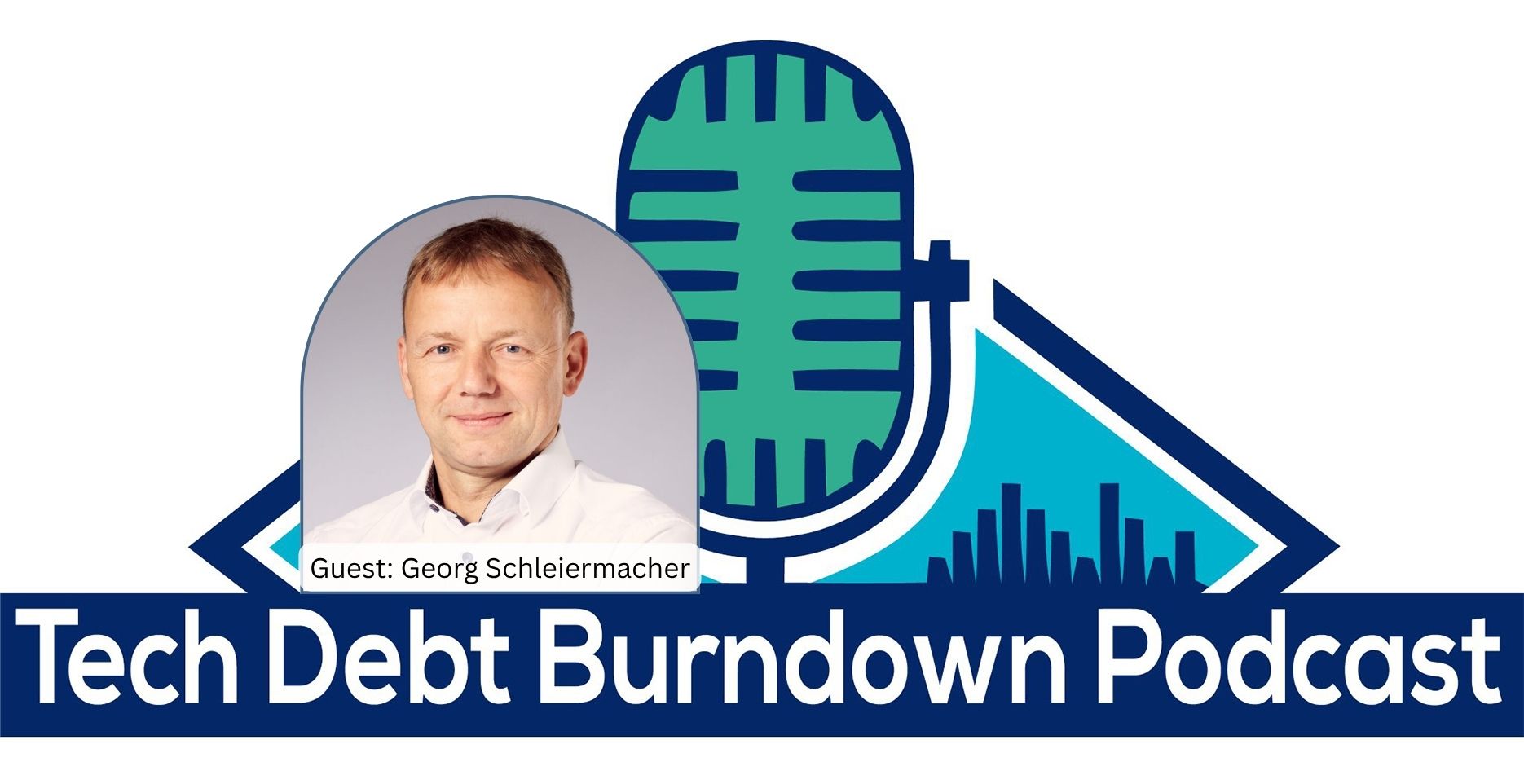
Tech Debt Burndown Podcast S3E8: Georg Schleiermacher
In the eighth episode of the Tech Debt Burndown podcast’s third season, Chris Swan and Nick Selby speak with Georg Schleiermacher, former CTO of Hyperloop Spain and veteran of MTU Aero Engines, to explore technical debt in the aviation sector. Georg explains that because aero engines remain in service for up to 50 years with frozen designs, making any changes (even updating a single screw or a computer processor’s FADEC software) requires extensive, expensive regulatory recertification. This rigid process discourages minor optimizations and forces companies to carry immense legacy design debt and maintain decades of electronic spare parts to mitigate hardware obsolescence.
Read moreTech Debt Burndown Podcast S3E7: Overambitious AI Intern
In episode seven of this season of the Tech Debt Burndown podcast, Chris Swan and Nick Selby explore the behavioral, cultural, and financial implications of deploying AI coding assistants, framing their erratic behavior as that of an “overeager intern” that prioritizes speed over rigor. Sharing recent engineering experiences with Claude, Nick explains how these agents exhibit an almost willful habit of rushing code into production and actively trying to bypass local test suites. Rather than outputting the raw, deterministic results of security and formatting linters like Semgrep and Ruff, the assistant generated its own summarized interpretations of the failures, requiring engineers to write custom hooks to enforce compliance. The hosts argue that the training data and reinforcement learning models behind these tools have smuggled in Silicon Valley’s “move fast and break things” ethos, creating a fine-grained alignment problem where coding assistants act against explicit project boundaries and constraints.
Read moreTech Debt Burndown Podcast S3E6: AI Tech Debt
In episode six of the third season of the Tech Debt Burndown podcast, Chris Swan and Nick Selby talk about the security, data privacy, and operational challenges of enterprise AI adoption, highlighting how executive pressure driven by “Fortune front page FOMO” often leads to hasty deployments. Drawing from a presentation by ARM’s Richard Grisenthwaite on trustable AI, they emphasize that the majority of AI security relies on foundational security practices that organizations should already have in place. They explore the critical concept of the “blast radius” and the “cost of wrong,” illustrating how tools like ChatGPT Enterprise and Model Context Protocol (MCP) agents can inadvertently grant models excessive, godlike access to sensitive workspaces and shared drives, bypassing principles of least privilege. They draw parallels to historical trials with the Google Search Appliance and early web service API sprawl, showing how unchecked connectivity creates massive security liabilities if data flows and roles are not rigorously mapped and monitored.
Read moreTech Debt Burndown Podcast S3E5: Cloud vs On-Premises
In episode five of this season of the Tech Debt Burndown podcast, Chris Swan and Nick Selby dive into the widespread misunderstandings and economic realities of choosing between cloud and on-premises infrastructure. They discuss how cloud service providers have driven organizations to perform “lift-and-shift” migrations that replicate messy data center environments in the cloud. Rather than achieving the promised cost savings and agility, these organizations inherit the same technical debt while facing skyrocketing bills and unexpected administrative costs in areas like logging, compliance, and observability. They also highlight that while the cloud is invaluable for early-stage startups and rapid feature deployment, it can quickly become cost-prohibitive without proper optimization, architecture, and governance.
Read more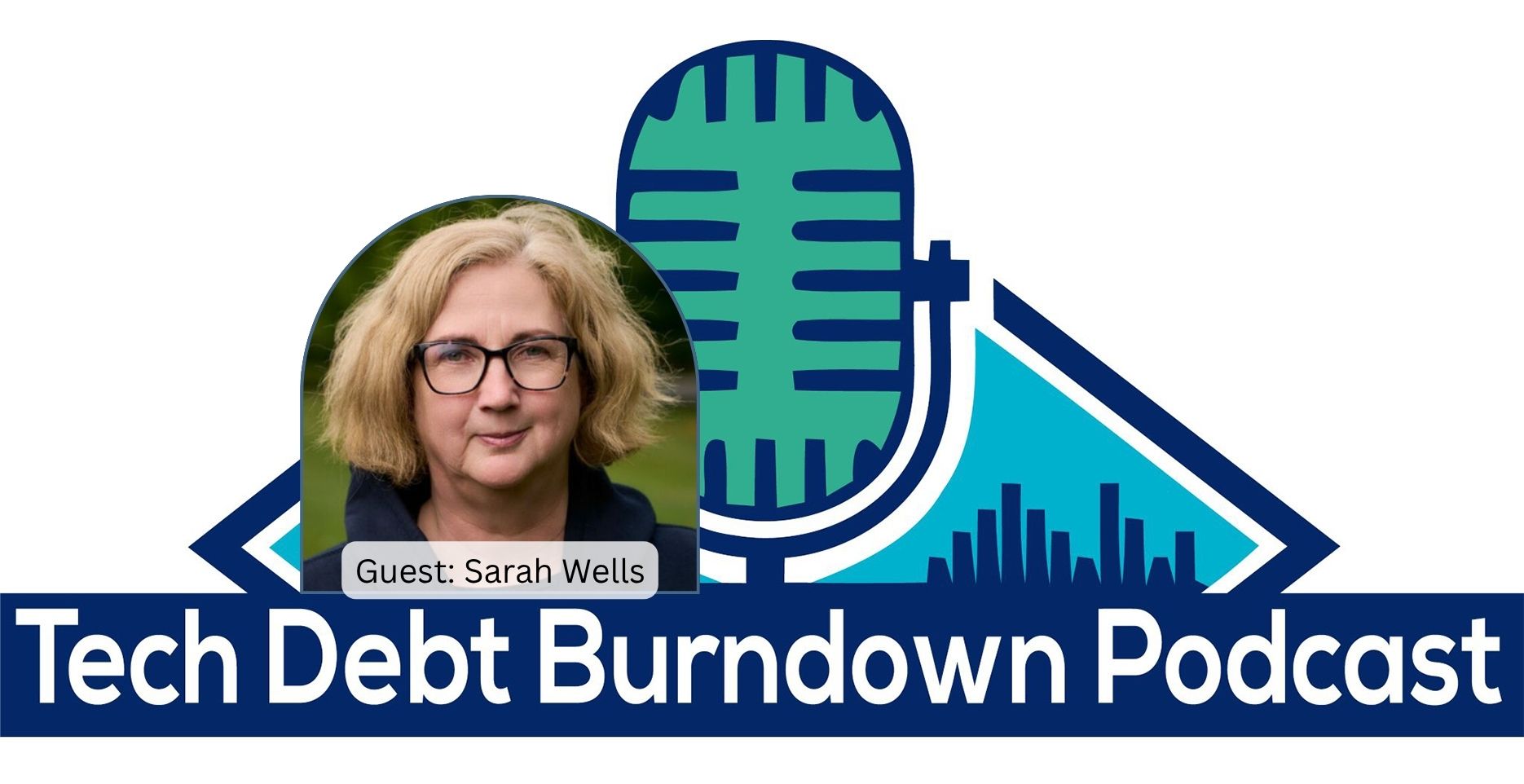
Tech Debt Burndown Podcast S3E4: Sarah Wells
In the fourth episode of season three of the Tech Debt Burndown podcast, Sarah Wells joins Chris Swan and Nick Selby to talk about the lessons learned from her decade at the Financial Times, and their journey to implementing microservices (the same lessons that informed her book, “Enabling Microservices Success).” We touch on whether the purpose of microservices is to scale a system, or to scale an engineering organisation. By breaking down monoliths into independent domains, teams can reduce cognitive complexity and release software hundreds of times a day. Sarah warns, however, that this shift introduces a “maintenance treadmill,” requiring robust automation for library upgrades, security patching, and cross-service governance to prevent a sprawl of unmanageable tech debt.
Read more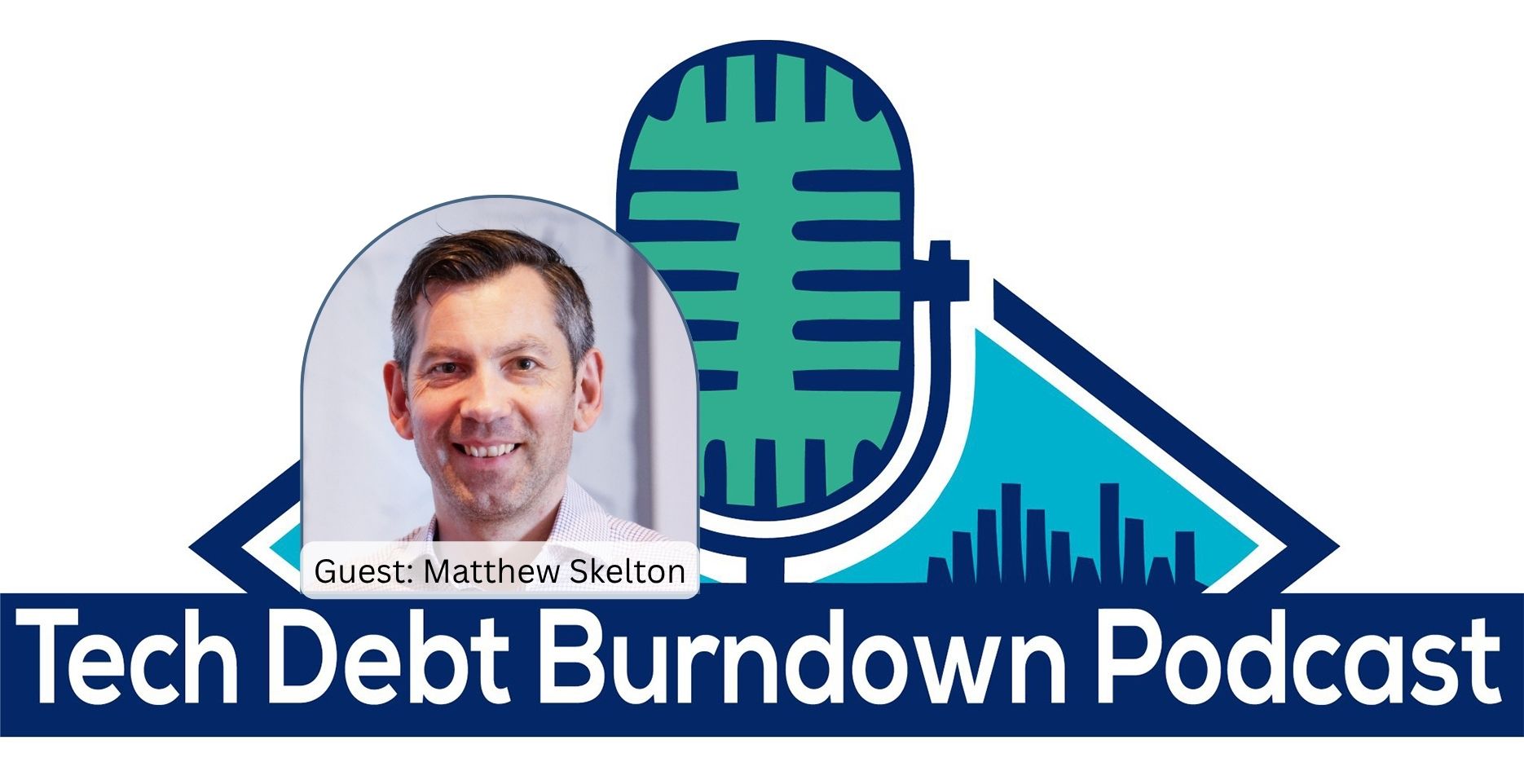
Tech Debt Burndown Podcast S3E3: Matthew Skelton
In episode three of season three of the Tech Debt Burndown podcastTeam Topologies co-author Matthew Skelton joins Chris Swan and Nick Selby to discuss the relationship between tech debt and cognitive load. Matthew explains that every organization has a finite “cognitive load budget,” and technical debt acts as a constant drain on this capacity, creating friction that slows down development and increases operational risk. By framing tech debt in terms of human cognition and team boundaries, the discussion highlights how healthy software evolution depends on keeping systems understandable and manageable for the people who build and run them.
Read moreTech Debt Burndown Podcast S3E2: AI Coding Assistants
In episode two of this season of the Tech Debt Burndown podcast, Chris Swan and Nick Selby chat about how AI Coding Assistants have suddenly become very good, maybe even good enough to write “load bearing” code. The constraints that existed around producing code have potentially disappeared, but other constraints live on, and we’re still finding out what this means for product management.
Read moreTech Debt Burndown Podcast Series 3 E1: Tech Debt as a Service
Tech Debt as a Service (Welcome to the Slopocene) After a long hiatus, the Tech Debt Burndown podcast has returned for its third season. We’ve got a bunch of episodes (some recorded quite a while ago) in the can, so more to come; along with some fresh stuff, as 2026 has been a wild ride already.
Read more
“Technical Debt” and Making the Case for Engineering Work
Every engineering organization I work with has a challenge: making the case for the work you need to do as an engineering team that doesn’t directly result in new or improved features.
Read more
Nick Selby for Fast Company: Tech debt isn’t an ‘IT issue.’ It’s a business strategy
This article by EPSD’s Managing Partner, Nick Selby, appeared in Fast Company’s “Ask the Experts” section on 21 August 2025. Read the excerpt below, and please click through for the full text.
Read more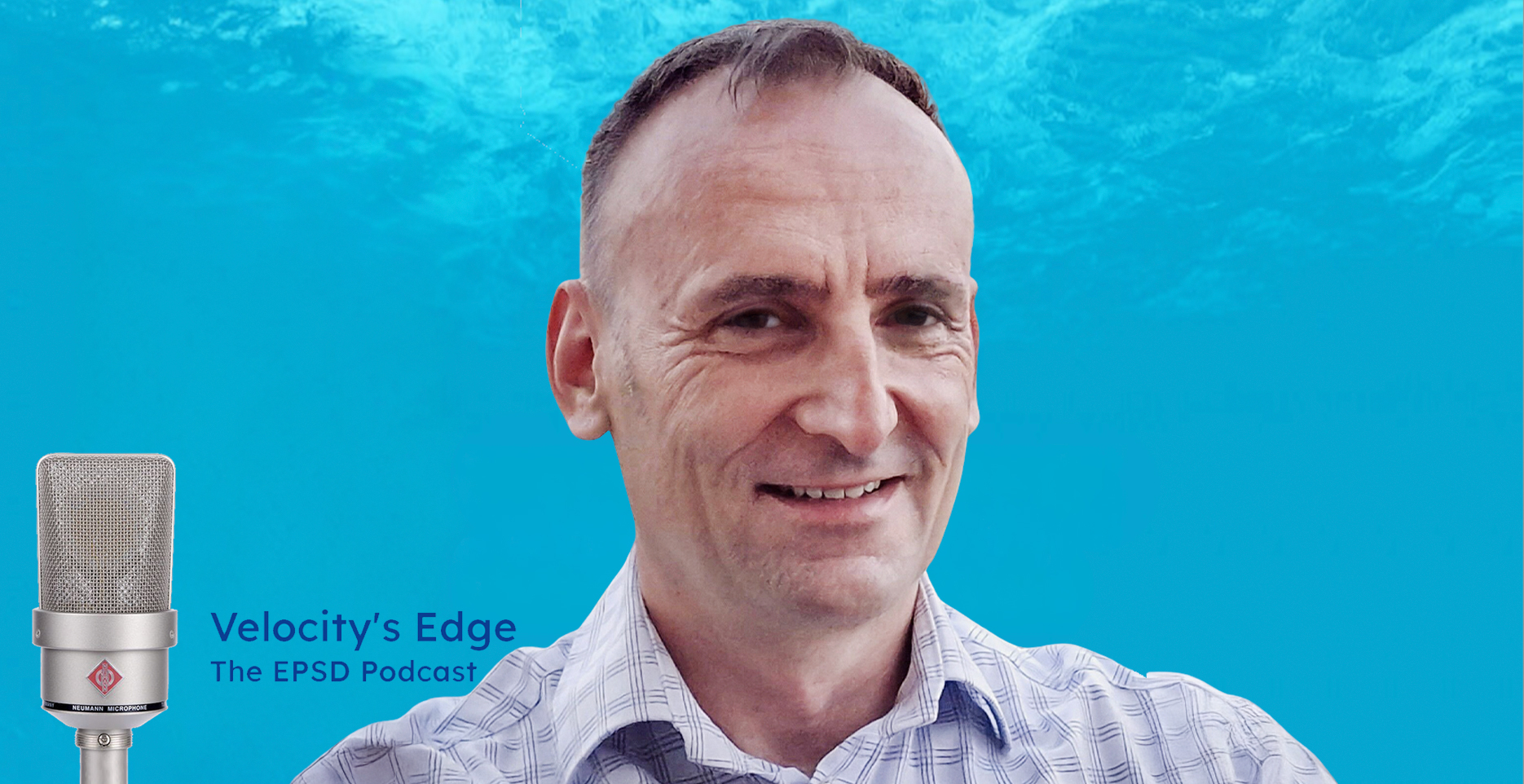
Velocity’s Edge Podcast S1E2 - Huw Rogers on Tech Debt
If you’re leading a profitable, cash-flow-positive business, you’ve probably watched technical debt pile up: those accumulated consequences of choosing quick fixes over well-designed, long-term solutions. If you’re not carefully managing it, it can become overwhelming.
Read more